Keeping a business running while upgrading the building around it can feel like changing a tire on a moving car. Every day of downtime means lost revenue, frustrated customers, or idle staff, yet outdated systems and worn-out infrastructure eventually become too costly to ignore. The good news is that with the right planning, sequencing, and partners, most modernization projects can happen in phases that protect your daily operations.
This guide walks through the practical decisions property owners face when upgrading a facility without hitting pause on business.
Mapping Out a Phased Renovation Timeline
Before any tools come out, successful modernization projects start with a written plan that breaks the work into stages small enough to manage around normal business hours. This means identifying which areas can be closed temporarily, which must stay operational at all times, and which upgrades can happen after hours or on weekends. A realistic timeline also builds in buffer days for delays, since almost every renovation runs into at least one surprise once walls or ceilings are opened.
Property owners who skip this step often end up with overlapping trades, blocked entrances, or noise complaints from tenants and customers. Walking the property with a contractor beforehand to flag pinch points, like shared hallways or the only functioning restroom, prevents a lot of headaches later.
- Break large projects into two-to-four week phases instead of one long shutdown
- Identify which zones need to remain fully accessible during business hours
- Schedule the loudest or messiest work for evenings, weekends, or slow seasons
- Build a two-week buffer into the schedule for unexpected findings
Protecting the Building Envelope During Upgrades
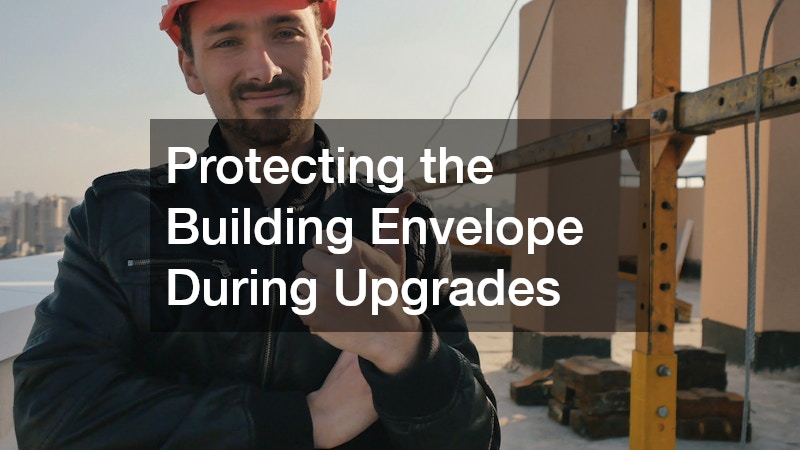
Roof work is one of the most common modernization projects because aging membranes and flashing eventually lead to leaks that damage inventory, equipment, or ceiling tiles. A well-planned commercial roofing project can often be completed in sections, allowing crews to work over unoccupied areas first while keeping active work zones dry and protected underneath. Owners should ask contractors how they plan to manage weather exposure and debris containment during each phase, since a poorly sequenced job can let water in faster than the old roof did.
Timing matters just as much as technique. Scheduling roof replacement or recoating during milder weather months reduces the risk of delays and gives materials the best chance to cure properly, which extends the lifespan of the investment.
- Ask about temporary weatherproofing between phases
- Confirm how debris and materials will be staged to avoid blocking entrances
- Request a dust and noise plan if the roof sits above active workspaces
Managing Site Access While Work Is Underway
Construction crews, deliveries, and building occupants all need to move through the same space safely, which is why many owners use the renovation as an opportunity to upgrade security at the same time. Installing or updating access control systems during a modernization project allows management to restrict certain zones to authorized personnel only, which is especially useful when contractors need after-hours access but the rest of the building should stay locked. Modern systems can also generate reports showing exactly who entered which area and when, which is helpful for both security and liability purposes during construction.
This upgrade doesn’t have to wait until the very end of a project. Many contractors can install the wiring and hardware early, then activate the full system once other phases are complete, minimizing the number of times walls or ceilings need to be reopened.
- Set temporary credentials for contractors that expire automatically
- Restrict access to areas with exposed wiring or unfinished flooring
- Use activity logs to confirm work hours match contractor invoices
Choosing a Partner to Oversee the Entire Project

Coordinating electricians, roofers, flooring crews, and inspectors is a full-time job in itself, which is why many property owners bring in a single point of contact to manage the moving parts. A reputable commercial GC (general contractor) handles scheduling conflicts, permit paperwork, and code compliance so that the owner isn’t left chasing down subcontractors or explaining the same project details five times. This oversight becomes especially important on renovation jobs, where a dozen or more trades might rotate through a building over several months.
This is especially valuable when phases overlap, since a general contractor can shift trades around to keep the building functional between stages. For example, if electrical rough-in runs behind schedule, a good commercial general contractor can reorder the flooring or drywall crews so the timeline doesn’t collapse entirely, and so employees or customers aren’t left navigating a half-finished space longer than necessary.
When vetting a potential partner, ask for references from similar projects, proof of licensing and insurance, and a clear breakdown of how they handle change orders. It’s also worth asking how they communicate progress — weekly site walks, shared digital dashboards, or daily email updates all signal a contractor who treats transparency as part of the job, not an afterthought.
When interviewing potential partners, ask for references from projects completed in occupied buildings specifically, since the skills required to work around customers and staff differ from working in an empty construction site. Request at least two or three contacts from similar-sized facilities, and actually call them. Ask former clients pointed questions: Did work crews stick to agreed hours? Were walkways kept clear and safe? How quickly were complaints or unexpected issues resolved?
A contractor experienced in phased, occupied renovations will already have systems in place for noise control, dust barriers, and daily cleanup. Look for specifics like negative-air-pressure containment units, zipper-wall dust barriers, and quiet-hour scheduling for high-decibel work such as demolition or drilling. These details separate a crew that merely tolerates an occupied site from one that has genuinely built its process around it.
It also helps to ask how the partner handles communication once work begins. The best contractors assign a single point of contact who can update your team daily, flag schedule changes before they become surprises, and coordinate directly with your facilities or operations staff. That kind of transparency prevents the small disruptions that can otherwise snowball into bigger operational headaches.
- Request references from at least two occupied-building projects similar in scope or trade mix to yours
- Ask each reference how the contractor handled noise, dust, or access issues while people were working nearby
- Ask how change orders and delays will be communicated, and how quickly you can expect notice
- Get specifics on the format: email updates, weekly calls, or a shared project dashboard
- Confirm one project manager will be the single point of contact throughout, not a rotating cast of foremen
- Verify that person has direct authority to make schedule or scope decisions on-site, rather than needing constant sign-off from someone else
Relocating Equipment and Inventory Without Losing Time
Modernization projects often require moving heavy machinery, shelving, or inventory out of a work zone temporarily, and doing this safely takes more than a few strong employees. Hiring a commercial moving company that specializes in industrial or office relocations reduces the risk of damaged equipment and workplace injuries, since these teams bring proper dollies, padding, and lift equipment designed for the job. They can also plan the move for off-hours so operations barely pause.
For facilities moving especially heavy or awkward loads, such as manufacturing equipment or steel racking, rigging equipment quality matters just as much as the movers themselves. Working with a trusted web sling manufacturer ensures the straps and lifting gear used during the move meet weight ratings and safety standards, which protects both the equipment and the people handling it.
- Get a written inventory of items being moved and their condition beforehand
- Confirm the moving crew carries insurance covering equipment damage
- Verify rigging gear is rated for the specific load weights involved
- Schedule moves during the lowest-traffic hours of the day
Updating Floors With Minimal Downtime

Floors take a beating in commercial spaces, and cracked or stained concrete can make even a newly renovated building look neglected. Commercial epoxy flooring is a popular upgrade because it can be applied in sections and cures fast enough that portions of a warehouse, garage, or retail floor can reopen within a day or two rather than a full week. This makes it a practical choice for owners who can’t afford to close an entire facility at once.
Beyond appearance, epoxy coatings resist chemical spills, oil stains, and heavy foot or forklift traffic far better than bare concrete, which reduces long-term maintenance costs. Choosing the right thickness and finish depends on how the space is used, so it’s worth discussing traffic patterns with the installer before committing to a product.
- Ask about cure times for foot traffic versus heavy equipment traffic
- Request a slip-resistant finish for areas prone to spills or moisture
- Coordinate flooring work with other trades to avoid tracking dust onto new coatings
Securing a Reliable Water Source for Growing Facilities
Facilities that are expanding square footage or adding restrooms, kitchens, or irrigation systems sometimes discover their existing water supply can’t keep up with new demand. In these cases, a commercial water well drilling service can assess whether an on-site well is a viable option, which reduces dependence on municipal systems and can lower long-term water costs. This is particularly relevant for properties in rural or semi-rural areas where city water access is limited or expensive to extend.
Drilling and testing typically happen early in a project timeline since it involves heavy equipment and needs to be coordinated around other groundwork like utility lines or landscaping. Getting a water quality and flow rate assessment before finalizing building plans prevents costly redesigns later.
- Test flow rate and water quality before finalizing fixture counts
- Coordinate drilling schedules around other underground utility work
- Ask about permitting requirements specific to your municipality
Keeping Grounds Presentable While Construction Continues
A building can be undergoing major interior upgrades and still make a strong first impression if the exterior grounds are well kept. Ongoing commercial landscape maintenance services during a renovation help mask the visual disruption of dumpsters, equipment staging, and material deliveries, keeping walkways clear and green spaces tidy for customers and employees. This is a small investment that pays off in how the property is perceived while work is underway.
Landscaping crews can also help manage practical issues like erosion control near excavation areas or temporary fencing around active work zones. Coordinating their schedule with the construction timeline avoids situations where freshly mulched beds get trampled by equipment the following week.
- Schedule lawn care and trimming around delivery and equipment staging days
- Add temporary fencing or signage to protect landscaped areas near work zones
- Keep entrance walkways clear of debris and materials at all times
Fabricating Custom Structural and Safety Components
Not every modernization project fits standard, off-the-shelf parts, especially when a building has unique dimensions, older infrastructure, or specific load requirements. Working with a shop skilled in commercial metal fabrication allows owners to get custom railings, staircases, equipment mounts, or structural supports built to exact specifications rather than forcing a generic product into place. This is often necessary when upgrading loading docks, mezzanines, or safety guarding around new machinery.
Custom fabrication also tends to hold up better over time since the components are built for the specific loads and conditions of the space rather than a general use case. Getting measurements and load requirements confirmed early prevents delays waiting on remade parts.
- Provide exact measurements and load requirements before fabrication begins
- Ask about lead times, since custom pieces take longer than stock parts
- Request weatherproof coatings for any components installed outdoors
Equipping Crews With the Right Tools for the Job

The pace of a renovation often comes down to whether crews have reliable, properly maintained equipment on hand, and this is an area where cutting corners causes real delays. Facilities managers overseeing in-house maintenance teams often turn to commercial power tool suppliers to outfit staff with commercial-grade drills, saws, and grinders that hold up under daily use rather than consumer tools that wear out mid-project. Having the right equipment on site also reduces the number of trips crews make off-site for rentals, which keeps the timeline moving.
Beyond the tools themselves, many suppliers offer maintenance plans and loaner equipment during repairs, which matters when a single broken tool could otherwise stall an entire phase of work. Building a relationship with one supplier for ongoing projects also tends to result in better pricing and faster service over time.
- Choose suppliers offering repair or loaner programs to avoid downtime
- Stock commonly used consumables like blades and bits before starting a phase
- Compare rental versus purchase costs for tools needed beyond one project
Modernizing a facility while keeping it open for business is entirely achievable when the project is broken into manageable phases and handled by the right specialists at each stage. Start by mapping out which upgrades are most urgent, then bring in trusted partners one system at a time rather than tackling everything at once. With careful sequencing, your daily operations can continue with minimal disruption while your facility steadily becomes safer, more efficient, and better equipped for the future.